Tuesday, August 9, 2016

MODULE 10: GRAPHIC NOVELS & CENSORSHIP ISSUES Captain Underpants


· Book cover image (OPTIONAL)

Book Summary:
This is part two of the series, so the story starts from the point where part one ends. After the bionic hamster spit the three massive boogers into outer space, brains of Mr. Krupp and Melvin Sneedly were mysteriously switched. So Mr. Knapp the principal, who wears his underwear on the outside of his suits, became Melvin, a little bratty kid. The adventure begins when trying to remember who is really who and why an adult is throwing a tantrum and why a child is acting all important with his friends. George and Harold went back in time with a time traveling machine to go back just a few days to collect the Combine-O-Tron 2000, which can switch brains and super powers back to the correct body. 
While these two were gone Child Melvin brain with Mr. Knapp’s body began firing everyone he saw. The Cafeteria lady, Mr. Knapp’s secretary to name a few.
After the two were zapped back into their original bodies and super powers were returned, the mob of angry of fired employees came after Mr. Knapp who had no idea he had fired them.

During the trip back to get the Combine-O-Tron 2000, they went too far back in time and ended up with the dinosaurs. George had befriended a pterodactyl.  He was supposed to return it to his time, but instead, he returned it to his home. So the next day they. Harold and George with the pterodactyl entered the purple port-a-potty and flips switched to go back in time once again. Something backfired and the ending is …well another story to follow.
APA Reference of Book:

 Pilkey, D. (2003). Captain Underpants and the big, bad battle of the Bionic Booger Boy,        part 2: The revenge of the ridiculous Robo-Boogers: The seventh epic novel. New York: Scholastic. 
Impressions:
I understand why these books are popular with the students. I however, was  not impressed. I really had a hard time wrapping my brain into it. The writing is cute, as when a child writes with all the misspelled words, the words crossed out and rewritten again. That could be one of the reasons the children likes this book series. The drawings is like that of a child, so in a child's view, they perhaps believe that a child did write these books.
I can see why parents are not too impressed with them. The misspelled words could be seen as it is ok to write and publish with all the errors. The title of this book alone could be another reason. "Bionic Booger Boy...Robo Boogers. Not everyday words we want our children speaking about at the dining room table with the grandparents. Also the fact that a grown man wears his underpants on the outside of his pants and is a super-hero, can be seen as disturbing. I think, however, if a child is reading then encourage it and afterward discuss what they read, and how some of the words are not dinner material. 
Professional Review:

Review

Captain Underpants and the Big, Bad Battle of the Bionic Booger Boy, Part 2: The Revenge of the Ridiculous Robo-Boogers


Part 2 of CAPTAIN UNDERPANTS AND THE BIG, BAD BATTLE OF THE BIONIC BOOGER BOY opens with the vilest, most disgusting and most terrifying creatures on the face of the earth --- the Ridiculous Robo-Boogers. They're chasing George, Harold, Melvin and Mr. Krupp down the city streets and have them cornered. But at the very last second, Sulu the Bionic Hamster saves the day. He stuffs the three snotty fiends into his mouth and shoots the slimy villains into space, never to be seen again. This sequence lasts only 10 pages, making it the shortest Captain Underpants adventure ever. Well ... not exactly. Unfortunately for George and Harold, their incredible adventure has only just begun.
THE REVENGE OF THE RIDICULOUS ROBO-BOOGERS centers on Melvin Sneedly and Mr. Krupp, who aren't quite themselves. Somehow their brains were switched around, so Mr. Krupp's brain is now in Melvin's body and Melvin's brain is in Mr. Krupp's body. Needless to say, the situation is quite confusing. The Combine-O-Tron 2000 would help solve the problem, but it was smashed in the last book. All hope seems to be lost, until George comes up with the brilliant suggestion that Mr. Melvin (the guy who looks like Mr. Krupp but has Melvin's brain) build a time machine that would allow him to go back in time to before the Combine-O-Tron 2000 was smashed, grab it, and bring it back to the present time.
This is exactly what Mr. Melvin decides to do, and his determination to succeed is heightened when he finds out that Mr. Krupp is actually Captain Underpants. When he gets his younger body back, Melvin is confident that he will become the world's first super-powered kid. When the time machine (a portable purple potty) is ready, Mr. Melvin sends George and Harold away to test it. After a series of wacky events, they finally recover the Combine-O-Tron 2000 and the brains of Melvin and Mr. Krupp are back where they belong.
So the story is over and everyone lives happily ever after, right? Wrong! After all, this IS a Captain Underpants adventure, where nothing remains normal or peaceful for too long. Will Melvin succeed in becoming the world's greatest superhero? Maybe. Have we really seen the last of the Robo-Boogers? Not a chance! Is THE REVENGE OF THE RIDICULOUS ROBO-BOOGERS just as fun to read as previous Captain Underpants books? You bet!
Reviewed by Tom Donadio on August 13, 2012
 Captain Underpants and the Big, Bad Battle of the Bionic Booger Boy, Part 2: The Revenge of the Ridiculous Robo-           Boogers. (2012, August 13). Retrieved from http://www.kidsreads.com/reviews/captain-underpants-and-the-big-           bad-battle-of-the-bionic-booger-boy-part-2-the-revenge-of-the 

Library Uses
This could be used to show students that everyone makes mistakes and that they can correct the errors. However, I think that this could be a book just for the funny things said in it and for a group read.

Monday, August 1, 2016

MODULE 9: POETRY & SHORT STORIES Water Sings Blue


· Book cover image (OPTIONAL)
Book Summary:
The poems are short and very quick reading. There are 22 poems in this book.  The illustration has been done wonderfully. The pictures help bring the poems to life. 
APA Reference of Book:

 WATER SINGS BLUE by Kate Coombs , Meilo So | Kirkus Reviews. (2012, March 15). Retrieved from https://www.kirkusreviews.com/book-reviews/kate-coombs/water-sings-blue/ 
Impressions:
I am not a fan of poems. However, I picked this book because I love the sea and I thought it might be interesting. The cover is delightful. The words paint a wonderful image in my mind. The best poem I thought was Shark. She wrote: 
He circles and stares
with broken glass grin
His body a dagger
with lion's tongue skin
He slides through the water 
like a rumor, like a sneer
He's a quick twist of hunger
He's the color of fear.

I really like that end sentence : Color of Fear.  It strikes me with such passion and I have never thought that way about a shark, as true as it is. 
This is really a great book to help introduce children to poetry.

Professional Review:

KIRKUS REVIEW


Twenty-three poems and evocative watercolor paintings pay tribute to the wonders of the ocean world.
The versatile Coombs shows she’s as adept at poetry as she is at concocting or adapting fairy tales (Hans My Hedgehog, 2012, etc.). She invites young readers into her celebration with an opening “Song of the Boat” and ends with the message of the “Tideline.” “ ‘Don’t forget me— / I was here, / wasss h e r e / wasssss h e r e …’ ” Varied rhyme and rhythmic patterns and surprising connections characterize these relatively short poems, which read aloud well and stick in the memory. There’s humor, interesting language and intriguing imagery, as when the Gulper Eel’s “astronomical maw” is compared to a black hole. Thoughtful organization and placement of text on the page and So’s wavery, watery illustrations extend the poems’ meaning. A series of couplets describing “What the Waves Say” is illustrated with panels of varying water-surface patterns. Three different jellyfish poems share a double-page spread; another spread emphasizes the size of a blue whale with its vertical orientation and a shipwreck lying at the bottom. Sand-colored endpapers show objects washed up on shore: a shell, a feather, a crab’s claw and what might just be the remains of a footprint.
Share this admirable appreciation with a wide audience.  (Picture book/poetry. 4-10)

Library Uses
This would be a great book for poems and about the ocean. The poems are short so this is easy to read and discuss after each one. This book also opens up doors for children who have never been to the sea. This is a great book to read for some relaxing down time also.
As I was typing this thought popped into my head: Have the children sit at their desks with a couple of sheets of blank drawing paper. When something is read to them that moves them, have them draw it out, a rough sketch. When the book is finished have them finish their drawings and then show the book's illustrations to them. 

Sunday, July 31, 2016

MODULE 6: HISTORICAL FICTION Tomas and the Library Lady


· Book cover image (OPTIONAL)
Book Summary:
While helping his family in their work as migrant workers far from their home in Texas, Tomas finds an entire world to explore in the books at the public library. 

APA Reference of Book:

 Mora, P., & Colón, R. (1997). Tomás and the library lady. New York: Knopf. 
Impressions:
This was a very entertaining book. I wasn't aware that the writer is from El Paso, Texas. The cover is a little too much for me. The story was wonderful. The Illustrations helped bring the story to life. The life of immigrant children is not easy to discuss and their lack of school is something that needs to be brought to the forefront. This librarian took Tomas under her wing and helped to open doors to worlds he might never have known about and gotten a chance to explore. This book to me seems like it was written from the heart and with a lot of love. This book will be a book I will read to my class this next school year. 
Professional Review:
It's not easy moving time and again, but Tomás and his family are migrant workers who travel from state to state, helping farmers harvest their crops. When they arrive in Iowa for the summer, Tomás finds an escape from the scorching heat at the town library. And once inside, he also discovers a surprising world filled with dinosaurs, tigers, and a great new friend.


"A gentle text and innovative artwork depict a pivotal summer in a boy's life when he and his family leave their Texas home for farm work in Iowa. One morning, while his parents pick corn, Tomás visits the imposing town library and meets a kindly librarian who gently coaxes him inside. Throughout the hot days thereafter, she offers Tomás cool drinks of water and adventurous escapes into books; on slow days he teaches her Spanish until it's time to return home to Texas: 'I have a sad word to teach you today. The word is adios. It means good-bye.' . . . While young readers and future librarians will find this an inspiring tale, the end note gives it a real kick: the story is based on an actual migrant worker [Tomás Rivera] who became chancellor of a university — where the library now bears his name." — Publishers Weekly
 Tomás and the Library Lady by Pat Mora | Scholastic.com. (n.d.). Retrieved from http://www.scholastic.com/teachers/book/tomas-and-library-lady#cart/cleanup 

Library Uses
Using this book can teach students about several different  issues that are covered in this book. First, immigrant students, and how going to school can be difficult with the moving with the seasons. Another lesson that can be used, is how librarians can be helpful, and how they can help children with books and can make a huge impression in child's lives. Also, another aspect that can be discussed is how some families might not have a lot of possessions but are richer than the wealthiest. 

Monday, July 25, 2016

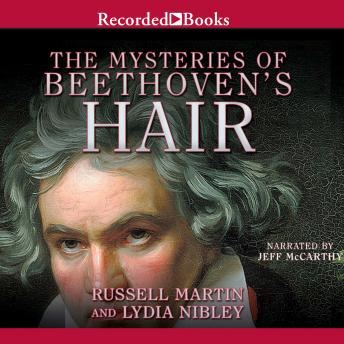
Module 7 Information Non-Fiction & Biographies Mysteries of Beethoven's Hair

· Book cover image (OPTIONAL)
Book Summary:
Beethoven is a name we all know. He was one of the greatest composers of all time. As  some of us might remember , Beethoven had health issues, which plagued him and his work. The health issues caused mood swings that people did not understand. They thought him strange and most did not like being in his company. It was customary that when someone died, who was famous, people snipped off sections of their hair as a memento. A young child who had meet Beethoven, prior to his death, Hiller had visited Beethoven's death- bed and took a snippet of his hair. He had it placed in a locked, which was passed down in his family. Because of the distrust and dislike of Jewish people, Hiller, and his family had to leave Austria for safety reasons. They were believed to have moved to Denmark, and hide out in a small town in their church. The locket of hair ended up in a Doctor's family, and no one is really sure why. It is rumored that the locket was given for safe keeping, and with the intent of returning after the war. This doctor and his wife did not have any children of their own but adopted a girl, who did not know of the hair until she had grown. As an adult, she was in dire need of money and needed to sell, and it was placed on the market from Southerby's in London. In Arizona, there was a collector who wanted something that was more personal than other items he had in his collection. A friend heard about the sale and bid on the hair. The two new co-owners had the hair tested to verify it was Beethoven's and then ran tests to see if they could figure out what had plagued Beethoven and his health. The result was a massive amount of lead was found in his hair. Lead poisoning can have the same symptoms as the ones Beethoven had died with. These two gentlemen and their scientists had full filled a wish that Beethoven had, that someone day, people would understand the reason behind his strange behaviors.
APA Reference of Book:
 Martin, R., & Nibley, L. (2009). The mysteries of Beethoven's hair. Watertown, MA: Charlesbridge. 
Impressions:
There are several book covers to this book. All of them are interesting and eye catching. 
I love history, and this book caught my attention. I did not know there was any mystery surrounding Beethoven and his hair. I like this book. Mr. Martin did a great job of weaving the past and more current story lines. The book covers Beethoven's life, his struggles and his music and his health issues. Mr. Martin also weaves the history of the hair being snipped after his death and how the hair was put in a keepsake locket and passed through the family and into strangers hands. The current owners, in Arizona and Texas  ( co-owners) are huge fans of Beethoven and have a wide variety of collections of his work. They had the hair DNA tested to validate that it is actually Beethovens and then ran tests to see what minerals were in his hair. They discovered that Beethoven had a large amount of lead in his system at the time of his death. This led the doctors and scientists who ran the tests, to understand and diagnosis Beethovens pains and symptoms. Before Beethoven's death, he had written a letter to his two brothers, were he said he wanted people to understand him and what was wrong with him. He never mailed the letter and it was found in his belongings after his death.Beethoven's symptoms were stomach issues, constipation, diarrhea, his wild mood swings. While he was in the hospital his doctor draining the extra fluid in his stomach. He drained him 3 different times and there was a lot of fluids. Beethoven went into a coma, and he awoke briefly during a thunderstorm, then passed away. 
I had never known about this story, this mystery, and the amazing history that this book followed. 
Professional Review:

Beethoven's Hair: An Extraordinary Historical Odyssey and a Scientific Mystery Solved

 3.71  ·   Rating Details  ·  1,228 Ratings  ·  193 Reviews
Ludwig van Beethoven lay dying in 1827, a young musician named Ferdinand Hiller came to pay his respects to the great composer. In those days, it was customary to snip a lock of hair as a keepsake, and this Hiller did a day after Beethoven's death. By the time he was buried, Beethoven's head had been nearly shorn by the many people who similarly had wanted a lasting memento of the great man. Such was his powerful effect on all those who had heard his music.

For a century, the lock of hair was a treasured Hiller family relic, and perhaps was destined to end up sequestered in a bank vault, until it somehow found its way to the town of Gilleleje, in Nazi-occupied Denmark, during the darkest days of the Second World War. There, it was given to a local doctor, Kay Fremming, who was deeply involved in the effort to help save hundreds of hunted and frightened Jews. Who gave him the hair, and why? And what was the fate of those refugees, holed up in the attic of Gilleleje's church?

After Fremming's death, his daughter assumed ownership of the lock, and eventually consigned it for sale at Sotheby's, where two American Beethoven enthusiasts, Ira Brilliant and Che Guevara, purchased it in 1994. Subsequently, they and others instituted a series of complex forensic tests in the hope of finding the probable causes of the composer's chronically bad health, his deafness, and the final demise that Ferdinand Hiller had witnessed all those years ago. The results, revealed for the first time here, are startling, and are the most compelling explanation yet offered for why one of the foremost musicians the world has ever known was forced to spend much of his life in silence.

In Beethoven's Hair, Russell Martin has created a rich historical treasure hunt, an Indiana Jones-like tale of false leads, amazing breakthroughs, and incredible revelations. This unique and fascinating book is a moving testament to the power of music, the lure of relics, the heroism of the Resistance movement, and the brilliance of molecular science.

An astonishing tale of one lock of hair and its amazing travels--from nineteenth-century Vienna to twenty-first-century America.
 
 Beethoven's Hair. (2008, February). Retrieved from https://www.goodreads.com/book/show/126669.Beethoven_s_Hair 

Library Uses
This book could be used for biographies and science. The tests ran 100 plus years after his death, is amazing and interesting. The history in this book is also another way for students to learn history without coming from a history book.

Sunday, July 17, 2016

Module 8 Mysteries This Gum for Hire

· Book cover image (OPTIONAL)


Book Summary:Chet Gecko is a fourth grader. He is a private investigator for hire. Suddenly player from the football team starts disappearing. Chet and his sidekick partner Natalie, a mockingbird, were hired from Herman, the Gila monster. As theThey have a brilliant idea, Chet will join the football team, which he hates sports and Natalie will become a cheerleader. When Herman hired Chet, there were only three football players that had disappeared. As the story goes on, a total of six. While Chet and Natalie find them, by the time they have their major football game with the rival school?  
APA Reference of Book:
Hale, B. (2012). This Gum for Hire. Austin, TX: Harcourt Paperbacks. 
Impressions:
The book cover is dark and a little gloomy looking. I had to look closely to see Chet in a football helmet and Natalie in a cheerleader outfit. In the background, an ominous figure lures in the doorway. The cover really isn't an eye catcher to me.
The story has a lot of humor, and some grossing out food items. Chet loves his food and some of the food he discusses is cockroach cupcakes, a bucket full of worms, Lice Krispie treats, peanut butter n dragonfly sandwiches, and fresh baked vanilla grubworm dream bars. These menu items would have any young 3rd-grade boy, licking his lips. ( kidding). The characters are very well throughout and Chet and Natalie interactions with each other shows a true friendship. The characters are animals, mockingbird, gecko, moles, Gila monster and a chuckwalla. The animals are placed in the correct character, that helps to give the reader a visual picture. 
Since this is a series, the characters have grown as each story is told, and the friendship of Chet and Natalie grows. 
Chet understands that as a gecko, he is small and is never going to be a Gila monster in stature. He uses his sense of humor to get out of sticky situations. This is a recommended book for my 3rd grade-students. 
Professional Review:

This Gum for Hire: A Chet Gecko Mystery(Chet Gecko Mystery #6)

by 
 3.82  ·   Rating Details  ·  100 Ratings  ·  5 Reviews
Kidnapped! One by one, the members of Emerson Hicky's football team are disappearing. As far as Chet Gecko is concerned, this is a cause for celebration.
Only trouble is that Chet's old nemesis, Herman the Gila Monster, is the number one suspect, and he wants Chet to clear his (not quite) good name.
Chet and his mockingbird partner, Natalie Attired, must solve the case fast, or Herman will make sure it's their last. But which is more dangerous--Herman . . . or P.E. class?
 This Gum for Hire. (n.d.). Retrieved, from http://www.goodreads.com/book/show/726919.This_Gum_for_Hire
Goodreads authors
Library Uses:
This book is full of idioms, humor,and visual pictures of the characters and food items. The books that are in this series is a good tool to help students understand how to write using adjectives. Since students don't enjoy writing this could help them in the bigger picture of how important adjectives are. The humor also can help students to understand that writing and reading books do not have to be boring. 
The books are entertaining and just a basic reading for fun, and A.R. points. 


Sunday, July 10, 2016

Module 5 Fantasy Fiction

Rapunzel's Revenge 


Book Summary:
We all know the story of Rapunzel, locked in the tower. This story takes the basics and adds some fancy twists. Rapunzel had been kidnapped when she was younger and the evil witch uses her magic to keep everyone in the story under her control. The story has moral lesson throughout the story. Rapunzel escapes the same way by letting her hair down. She meets a lot of colorful characters along the way. Her hero happens to be Jack as in Jack and the Beanstalk They steal horses, but feel remorseful all the way through the story. At the end, Rapunzel admits she had grown pretty fond of her horse and she wants to return the horse or offer to buy the horse.
The dwarfs from Cinderella's story was there and helped Rapunzel and Jack escape and find a way down the river. 
This story was interesting , pictures were great and the sense of humor was right on. This would be a great book to read to any class that does AR points. 
APA Reference of Book
 Hale, S., Hale, D., & Hale, N. (2008). Rapunzel's revenge. New York, NY: Bloomsbury. 
 Impressions: 
I did find the book fun and interesting at the beginning. The middle of the book seemed a little slow and boring, then after chapter 3 my interest was peaked.The drawings were drawn out nicely, and it was a compliment to the story. The adventures were well planned and thought out. The characters were funny and the names of the towns were cute. This is a very good book to help students practice their reading. Since the book is a graphic novel, students would enjoy reading this and sharing with their friends, over the comics.
The chapters were a bit too long for my preference. The flow of the story went smoothly, and I liked how other characters were woven into Rapunzel's story. All of the storybook characters we grew up on, were in this story. All were heroes in their won right in this story. 
 Professional Review: 

Book Review: Rapunzel’s Revenge by Shannon and Dean Hale

When Rapunzel finds that she was kidnapped as a small child, the woman she thought was her mother locks her away…you guessed it…in a tall, secluded tower.  That will likely be the last prediction you make as this re-imagined classic unfolds.
Rapunzel frees herself and learns that the evil ways of her adopted mother, Gothel, were not reserved for her alone, but the heartache and depression across the land have been caused by Gothel’s sinister reign. 
Rapunzel’s cohort, Jack, as in Calamity, unwittingly helps her find courage and strength throughout their adventures, all while toting around a goose that just won’t lay a seemingly innocuous egg.  Jack, in turn, is given a purpose to abandon his vigilante life, as he helps Rapunzel seek revenge and justice.
This is a story of growth, revenge, love and friendship that is both entertaining and absorbing. The colorful illustrations and witticisms complement each other in the telling, and the reader is allowed to experience the actions, emotions and hair-whipping brawls of the main characters as a result.
The illustrations, including a detailed map of “Gothel’s Reach,” are convincing in their portrayal of Rapunzel’s world. The plight, made clear by the presence of the barren lands and affected characters throughout the tale, is intensified by Nathan Hale’s (unrelated to the authors) attention to artistic detail.
This story re-introduces us to classic fairytale characters in a new way, and the heroine’s determination to pursue justice by honorable means is a particularly relevant theme to offer young readers at any time.
Rapunzel’s Revenge is the recipient of the 2008 Cybils (Winner Graphic Novels) for elementary/middle grades in the United States, but should be on everyone’s must read list.  If you’ve never found yourself drawn to graphic novels, this may be one to whet your appetite.  The story continues in Calamity Jack, also by the Hales.
“Rich with humor and excitement, this is an alternate version of a classic that will become a fast favorite of young readers.” (Booklist/September 2008)
“The dialogue is witty, the story is an enticing departure from the original, and the illustrations are magically fun and expressive.” (School Library Journal/September 2008)
“…Nathan Hale’s full-color panel illustrations fulfill the possibilities of this witty tale full of long-haired heroism.” (CCBC/2009)
Book Review: Rapunzel’s Revenge by Shannon and Dean Hale. (2011, October 22).                           Retrieved, from http://dallaslibrary2.org/blogs/bookedSolid/2011/10/book-review-               rapunzels-revenge-by-shannon-and-dean-hale/ 
 Library Uses: 
This book could have great use as lessons of moral values. I would use this book to just have a good story with some funny names and characters. This would be a good book just for the entertainment.

Thursday, July 7, 2016

Module 4 Realistic Fiction

Book Cover image


Book Summary
Ivy and Bean are best friends.They seem to start a lot of activities and then they quit. Bean's grandmother send her a book about ballet and as the two girls look over the book, they dream about doing the same dance moves. Both girls beg their mothers to sign them up, and the deal was none of them could complain. When they realized they are bad at dancing they had planned and schemed of ways to get out of the dance recital. The girls were given the roles of squids.They thought about breaking their arms, spraining their arms, catching a cold, and run away. Their class goes on a field trip to the aquarium. Ivy and Bean take off from their class to find a place to hide. On their mini adventure, they saw a film pertaining to squids.  The film scared the girls, so they changed their runaway plans and went home. After trying on their costumes, the girls decided that being squids would be fun after all. 
APA Reference of Book
 Barrows, A., & Blackall, S. (2009). Ivy Bean doomed to dance. San Francisco: Chronicle       Books. 
Impressions
The book has started off slow. I first thought that in today's time, the story line would not be very well received with students now-a-days. As I read more, and finished the book I really began to like the characters and their personalities. I will use this book to read to my class.
Professional Review
This delightful series, for more independent readers, shows how best friends learn to work together, solve problems, and have loads of surprising fun. Full of expressive black line illustrations, Book 6 has Ivy and Bean launching into ballet lessons thinking they have it made—or they are in over their heads? Will their friendship survive multiple disappointments? As the title implies and several chapters indicate, such as "Dip, Dip, Crash!" and "Bad News Beneath the Sea," unpleasant circumstances turn Ivy and Bean into master schemers. They are intent on finding a way to escape tremendous humiliation when ballet teacher Madame Joy casts them as Two Friendly Squids in her original production. As they stumble through practice sessions, they cannot believe they had begged for lessons. "We have made a terrible mistake." However, Ivy and Bean are definitely not quitters, except when it came to playing softball which was an entirely different situation. Performing "Wedding Beneath the Sea" on a real stage in a real theater as part of The World of Dance would be awesome. These best friends have incentive to remain true to their own creative devices. As plans for an aquarium field trip are announced, the girls decide to run away. An aquarium would be a quiet, safe place to lay low for awhile, and their ticket out of the ballet for good. Areas like Coastal Zones, the Kelp Forest, and where penguins, alligators, and sharks are located certainly offer possibilities. But when they come to "Life without Light: Creatures of the Deep Sea," they find the best, temporary hideaway. Or did they? Chapters called "Ocean Life Gone Bad" and "In Hot Water" tell about discovering a real squid that isquite frightening, but "oh, so interesting." Lastly, "Squidarinas" concludes the book with the girls deciding they have some authority to educate others about real squids. The once dreaded ballet production becomes exciting. It can be an artful scientific lesson that everyone will enjoy. Once again life is good, ballet is actually pretty fun. Ivy and Bean have brought readers another splendid adventure. Part of the "Ivy and Bean" series. Reviewer: Susan Treadway, M.Ed.

 Treadway, S., M.Ed. (n.d.). Ivy and Bean Doomed to Dance (Ivy and Bean Series #6).     Retrieved  from http://www.barnesandnoble.com/w/ivy-and-bean-doomed-to-dance-annie-barrows/1018814563#productInfoTabs 

Library Uses

This book would be a good story to help teach children about starting something and never quitting. Children don't follow through on what they start, because once it gets too hard, or confusing, they quit. Children haven't learned problem solving skills, and this book is one of many that would introduce them to solving issues even with a sense of humor.

Sunday, February 14, 2016

Module 3 Newbery Winners


Book Summary
Number the Stars is a book about innocence and how some girls were trying to keep theirs during a horrible time. Annamarie and her sister, Kristi along with Annamarie's friend, Ellen Rosen, are the main characters. Nazi's have occupied Denmark, and Jewish members of the community had started disappearing. Annamarie's parents help Ellen's family to escape to Sweden. Annamarie's oldest sister had died, and as the Nazi's were checking for Jews that were being hidden, Ellen was passed off as the third sister. The three girls travel out of Denmark and to see their Uncle. They were not aware that their Uncle was helping the Denmark Underground resistance and helping Jews escape. While they were there, they try to make the most out of their situation and help as much as they could. Annamarie's mother falls and breaks her ankle and Annamarie takes up the cause to help a boat of Jewish people make it across the strait. 
APA Reference of Book
 Lowry, L. (1989). Number the stars. Boston: Houghton Mifflin. 
Impressions
I really like this book. My mother grew up during Nazi occupied Germany and I have heard some of the stories first hand. This book, and many like this, are hard to read, because of the horrors that were committed to a race of people. The story is well written and shows the compassionate side of people during troubled times. This book might be hard for the younger grades, but 5th and up should be able to understand the story and understand why we must learn our past so we will never repeat it again. 
Professional Review
The author of the Anastasia books as well as more serious fiction (Rabbi Starkey, 1987) offers her first historical fiction--a story about the escape of the Jews from Denmark in 1943. Five years younger than Lisa in Matas' book (below), Annemarie Johansen has, at ten, known three years of Nazi occupation. Though ever cautious and fearful of the ubiquitous soldiers, she is largely unaware of the extent of the danger around her; the Resistance kept even its participants safer by telling them as little as possible, and Annemarie has never been told that her older sister Lise died in its service. When the Germans plan to round up the Jews, the Johansens take in Annemarie's friend, Ellen Rosen, and pretend she is their daughter; later, they travel to Uncle Hendrik's house on the coast, where the Rosens and other Jews are transported by fishing boat to Sweden. Apart from Lise's offstage death, there is little violence here; like Annemarie, the reader is protected from the full implications of events--but will be caught up in the suspense and menace of several encounters with soldiers and in Annemarie's courageous run as a courier on the night of the escape. The book concludes with the Jews' return, after the war, to homes well kept for them by their neighbors. A deftly told story that dramatizes how Danes appointed themselves bodyguards--not only for their king, who was in the habit of riding alone in Copenhagen but for their Jews.
 NUMBER THE STARS by Lois Lowry | Kirkus Reviews. (1989, March 15). Retrieved from          https://www.kirkusreviews.com/book-reviews/lois-lowry/number-the-stars-2/ 
Library Uses
This book would be a great resource to add to the lessons on Europe and the WW's.This would be a great book to read and compare to Annie Franks Diary, to see how the lives differed and how they were the same in so many ways. 


Module 2 Caldecott Winner


Book Summary
The story is about a young boy who is at the beach, looking for items that have been washed ashore. The title of the book means things that have been discarded and thought useless. He examines all the items to see if he can use them, then discovers a camera. He needs to clean it up and discovers film in the camera. He takes the film to be processed and sees another child in the developed picture. After looking deeper into the picture he notices, that the child is holding a picture of another child who is holding another picture of another child and so on. The young boy realizes what he needs to do, and follows the pattern. This book has amazing pictures. They are very detailed and makes the story.
APA Reference of Book
 Weisner, D. (2006). Flotsam. New York, NY: Clarion Books.
Impressions
I am not a really big picture book fan, however, I feel in love with this book. The pictures are amazing and very detailed. The story line is really cute how he takes a boring day at the beach and turns it into an adventure for this young kid. The cuteness of the picture that everyone adds their own image before returning it back to the sea. The basis of this story is very clever. 
Professional Review
A bright, science-minded boy goes to the beach equipped to collect and examine flotsam--anything floating that has been washed ashore. Bottles, lost toys, small objects of every description are among his usual finds. But there's no way he could have prepared for one particular discovery: a barnacle-encrusted underwater camera, with its own secrets to share . . . and to keep.

Each of David Wiesner's amazing picture books has revealed the magical possibilities of some ordinary thing or happening--a frog on a lily pad, a trip to the Empire State Building, a well-known nursery tale. In this Caldecott Medal winner, a day at the beach is the springboard into a wildly imaginative exploration of the mysteries of the deep, and of the qualities that enable us to witness these wonders and delight in them.
 
(Flotsam. (2008, April). Retrieved from http://www.goodreads.com/book/show/138070.Flotsam)

Library Uses
This book could be used in the lower grades to introduce them to science and the wonders of the ocean, plus the damage we are doing to it.

Tuesday, January 26, 2016

Module 2 Miss Rumphius


Book Summary:
For being written in 1982, I am pleased to note that it is dedicated to Saint Nicholas, patron saint of children, sailors and maidens.The main character is Alice. She lived by the sea and loved listening to her grandfather tell his stories of travel. She was very close to her grandfather and she loved to help him in his gallery, by painting the skys.
Her goal was to travel and when she grew old she wanted to live by the sea. HEr grandfather told her she needed to do one more thing, and that was the making the world a better place.
She didn't know that would be but as she grew and traveled, she experienced the world and its beauty. After she hurt her back, she laid in bed and thought about how she can make the world a better place. Her beautification was to throw lupine seeds everywhere she went. The following spring purple, blue and rose colored flowers were every where.
APA Reference of Book
 Cooney, B. (1982). Miss Rumphius. New York: Viking Press. 
Impressions
The drawings and colors are beautiful. The message this book has, is a powerful one. The message of leaving the Earth a better place and more beautiful than when you found it, is a message that still needs to be shared in today's times. 
Professional Review
Starting tomorrow, we celebrate National Wildflower Week (May 6-12th), created by the Lady Bird Johnson Wildflower Center, to “encourage the observations, cultivations, and study of native wildflowers.” Today’s book, Miss Rumphius by Barbara Cooney, completely embodies the spirit of this week. In this story, a spinster librarian travels around the world and eventually returns to a home by the sea. Wanting to make the world a more beautiful place, she decides to scatter lupine seeds wherever she goes.
Published in November of 1982, when Barbara Cooney lived in Damariscotta, Maine, Miss Rumphius was one of hundreds of books that Cooney, a two-time winner of the Caldecott Award, illustrated in her lifetime. By the time she worked on Miss Rumphius, she had over forty years of experience in children’s book illustrations. An autobiographical picture book, Cooney drew on the life of her great grandfather, who painted pictures and allowed his young daughter, Cooney’s grandmother, to help. “I see that little girl—painting away, making yards and yards of fluffy clouds and sunsets and storms with lightening and rainbows.” Cooney also based the character of Alice Rumphius on an historical figure who traveled the world planting flower seeds. Probably even more important, Alice became what Cooney described as her “alter ego.” She later mused, “Perhaps she had been that right from the start.”
What makes Miss Rumphius memorable for many young readers, however, is the exquisite artwork, executed in the purples, pinks, and blues of the lupines—breathtaking landscapes marked by their beauty and soft color. With its positive and idealistic message of making the world a more beautiful place, this book has captivated both young readers and the parents and teachers who share the book with them. It reminds all of us that with just a little effort we can add beauty to our world.
If you are planting wildflower seeds, pick up a copy of Miss Rumphius, a great read-aloud for kindergarten through third grade, and share it with children and adult friends—both will love it. Not only does Alice Rumphius make the world a more beautiful place by scattering lupines in the story, but Barbara Cooney enhanced our visual world by giving us this breathtaking picture book that we can return to again and again.
 A. S. (2011, May 5). Book-A-Day Almanac. Retrieved from http://childrensbookalmanac.com/2011/05/miss-rumphius/ 

Library Uses
This book can be used for all grade level in elementary. For the older grades, ecology and ways that they could help without costing a lot of money. The younger ones, colors, discussing wildflowers, and how the flowers add to the ecology. How flowers also add to the landscape.

Monday, January 25, 2016

Module 1 The Runaway Bunny

Displaying 20160125_184209.jpg

Book Summary

This book by Margaret Wise Brown and illustrated by Clement Hurd, is a very sweet book about a bunny who has decided he needs to go out on his own by running away. Every time he gave away he was going  to run away, his mother has a counter offer.
An example of the story is I will be a bird and fly from you" Little bunny said. "If you become a bird and fly away from me," said his mother, " I will be a tree that you come home to."

APA Reference of Book
 Brown, M. W., & Hurd, C. (1942). The runaway bunny. New York, NY: Harper Collins. 
Impressions
This book written in 1942 had perfectly encaptured the love that a mother has for her child. This book fits with the year it was written in. The values of family and the innocence of the young is what this book is based on. However, probably would not be a best seller in today's time. This book would be a special book in most young child's collection.
Professional Review
A little bunny keeps running away from his mother in an imaginative and imaginary game of verbal hide-and-seek; children will be profoundly comforted by this lovingly steadfast mother who finds her child every time.

The Runaway Bunny, first published in 1942 and never out of print, has indeed become a classic. Generations of readers have fallen in love with the gentle magic of its reassuring words and loving pictures.
 The Runaway Bunny. (2007, September 13). Retrieved from http://www.goodreads.com/book/show/58922.The_Runaway_Bunny 

Library Uses
This would be a great book for kinder or first graders. This could be used to show relationships, friendships, and love. This could be used for LEP students to also expand their knowledge at a young age.